What "London dry gin" really means: the legal definition, line by line
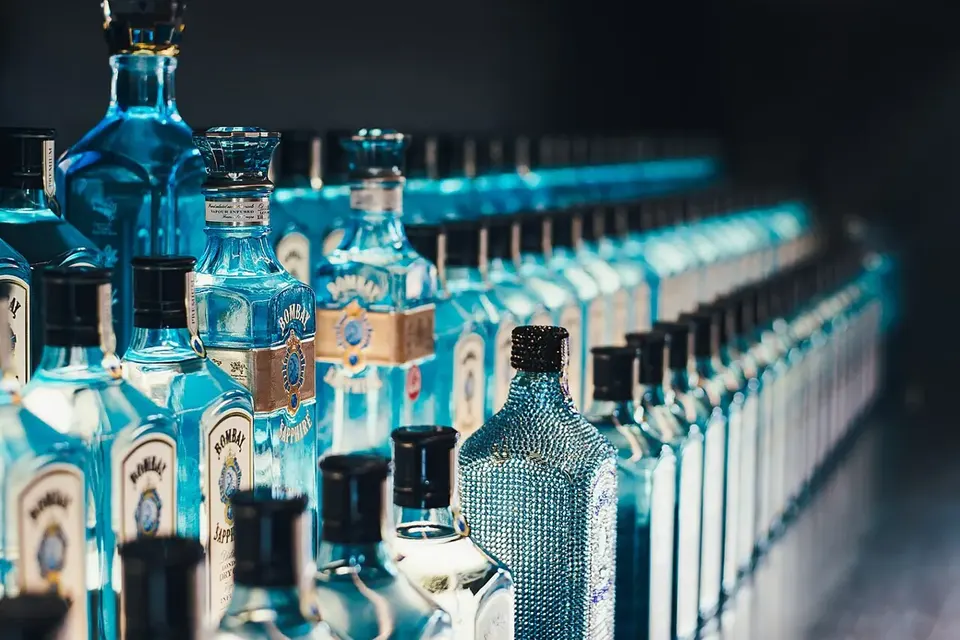
"London Dry Gin" is one of the most recognisable phrases on a back bar, and one of the most misunderstood. It is not a geographical name. It is a production method, defined in law, and a bottle made in Hampshire, Cornwall or Kyoto can carry it as long as the method is followed.
Three legal kinds of gin
In Great Britain the definitions come from Annex II of Regulation (EC) No 110/2008 on spirit drinks, which remained part of UK law after Brexit (the EU itself replaced it in 2019 with a new regulation that keeps the same three categories). The annex sets out three nested categories:
| Category | How the juniper flavour gets in | Minimum strength |
|---|---|---|
| Gin (category 20) | Neutral alcohol of agricultural origin flavoured with juniper berries; approved flavourings may be added, but juniper must predominate | 37.5% |
| Distilled gin (category 21) | Neutral alcohol of at least 96% redistilled in traditional gin stills with juniper and other natural botanicals; flavourings may be added afterwards | 37.5% |
| London gin (category 22) | A type of distilled gin in which all the flavour comes from the redistillation, with nothing but water added afterwards | 37.5% |
The regulation is blunt about the shortcut: "Gin obtained simply by adding essences or flavourings to ethyl alcohol of agricultural origin is not distilled gin." Such a product can still be sold as gin, but not as distilled gin, and certainly not as London gin.
The six conditions for London gin
Reading category 22 closely, a London gin must:
- start from agricultural ethyl alcohol with a maximum methanol content of 5 grams per hectolitre of pure alcohol;
- get its flavour exclusively from re-distillation "in traditional stills" of that alcohol "in the presence of all the natural plant materials used": no botanical can be added later;
- come off the still at no less than 70% alcohol by volume;
- use only alcohol of the same purity if more is added after distillation;
- contain no more than 0.1 gram of added sugars per litre and no colouring;
- contain no other added ingredients other than water, and be bottled at a minimum of 37.5%.
That is why a pink, sweetened or fruit-infused gin can be excellent and perfectly legal, yet never be a London gin: the colour, the sugar or the fruit added after distillation breaks the rules above.
And the word "dry"?
The regulation says the term London gin "may be supplemented by the term 'dry'". For London gin, "dry" adds no extra requirement, because the 0.1 g/l sugar limit already applies. For plain gin and distilled gin, "dry" is only allowed if the added sweetening does not exceed 0.1 gram of sugars per litre, a condition inserted by a 2014 amendment. So "London Dry Gin" and "London Gin" describe exactly the same product; the "dry" is a matter of style and habit.
Why "London", then?
The name records history, not geography. London was the centre of gin distilling, and the style of a dry, juniper-led gin made by redistilling botanicals became associated with the city's distillers. Its history has not always been glorious. In a 2013 article, the London distiller Sipsmith recalled that the Gin Act of 1751 "virtually outlawed small distilleries" after the excesses of the gin craze, and that when Sipsmith opened in 2009 it was the first copper-pot distillery to open in London in almost 200 years.
London has a few distilleries again. One of the most unusual was The London Distillery Company in Battersea, which made a gin called Dodd's using both a copper alembic and a cold vacuum still while it waited for its whisky to mature; we tell that story in The London Distillery Company, 2011–2016. But the bottle you buy labelled London Dry Gin may well have been distilled hundreds of miles away.
How to read a gin label in ten seconds
- "London Dry Gin" or "London Gin": all flavour from the still, nothing added afterwards except water, essentially no sugar, no colour.
- "Distilled Gin": made by redistillation with botanicals, but flavourings may have been added afterwards.
- "Gin" alone: juniper-flavoured spirit; may be made by flavouring neutral alcohol without redistilling.
- "Old Tom", "sloe gin", "pink gin": styles that are usually sweetened, coloured or flavoured after distillation, or separate categories altogether (sloe gin is legally a liqueur, made by macerating sloes in gin, and can be bottled at as little as 25%). That is why they are not sold as London gin.
- Strength: anything sold as gin must be at least 37.5% ABV. Below that, it is a juniper-flavoured spirit drink, not gin.
Strength also decides how much duty is paid on the bottle. At 37.5%, a 70 cl bottle of gin carries £8.92 of alcohol duty at the rates in force since 1 February 2026, before VAT. The full calculation is in how much tax is in a bottle of whisky or gin.
 Distilleries & history
The London Distillery Company, 2011–2016
Battersea, two copper stills and a gin named after an 1807 dreamer: London's whisky revival, from the archives.
 Whisky & tax
How much tax is in a bottle of whisky or gin?
£9.52 of duty in every 70 cl bottle at 40%: the tax share of a £20, £30 or £60 bottle, calculated.